
Honoring the Cycles
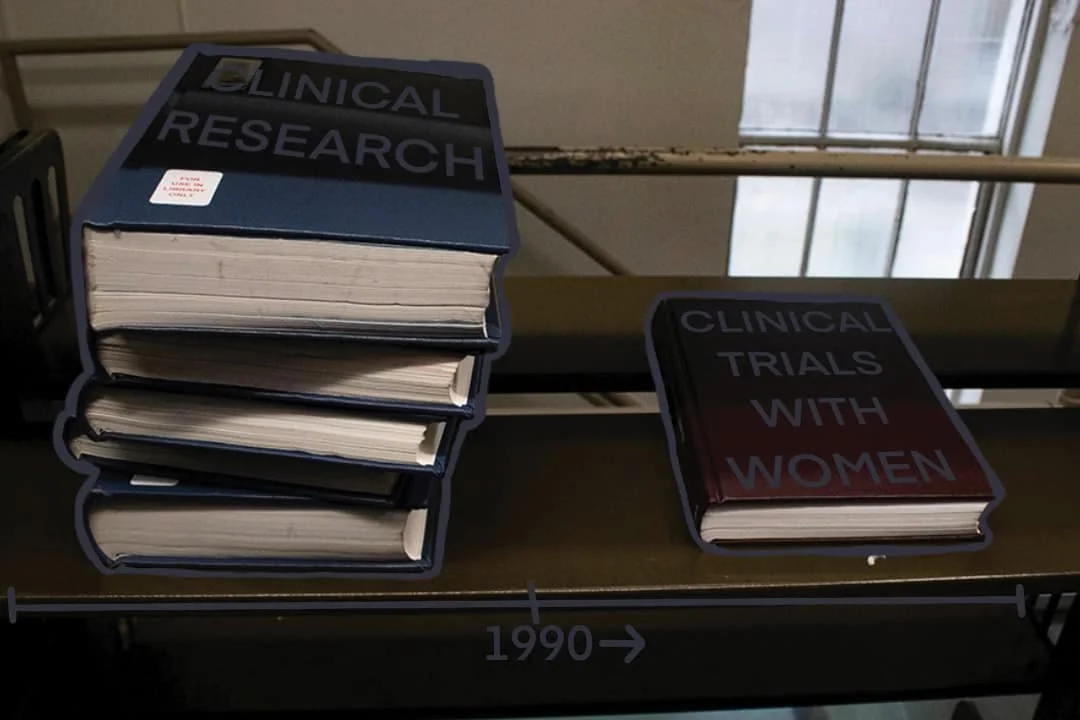
Women have historically been excluded from clinical studies.
CAROLINE BELLAMY/THE VARSITY
There are many different cycles in our lives.
Moon cycles
Wake Sleep cycles
Seasonal cycles
Circadian rhythm cycles
For women, honoring your body's own cycles (even if you're no longer cycling you can mimic it with the lunar cycle) may be one of the most important and least understood.
Have you beat yourself up for giving in and eating all the things?
Have you powered through workouts when you weren't feeling it?
Have you stalled out in your progress to lift heavier?
“Women are not small men.”
The reason could very well be that you've been treating yourself like a man. And, its not your fault. Until the 1990's nearly all research was done exclusively on men, because it was too inconvenient to study women due to their cycles. But, women are not just small men with breasts. Women's bio-chemical make-up is completely different and unique.
According to the National Institutes of Health History of Women's Participation in Clinical Research (and AI), "Scientific research began to more systematically include women as subjects in the 1990s, driven by a shift in federal policy that required their inclusion in clinical trials. Key developments included the 1993 NIH Revitalization Act, which mandated the inclusion of women in NIH-funded studies, and the FDA's 1993 reversal of a guideline that had effectively limited female participation in drug trials. This legislation aimed to correct the historical exclusion of women from research and ensure that studies adequately captured the different ways diseases and treatments affect both sexes." In other research and an article from The Varsity entitled, After centuries of exclusion, medical research on women still has a way to go - When it comes to running and analyzing studies in health-related research, sex matters, They find that despite these advancements, disparities in the enrollment of women and other underrepresented groups in clinical trials persisted, leading to continued gaps in knowledge about sex- and gender-specific responses to treatments.
So, all the diet and workout advice that is founded on ideas pre-dating 1993 that was based almost exclusively on men, and which has since been perpetuated (including in our own minds) must be taken with a grain of salt.
For example, in the second half of your cycle you may be hungrier and more tired. This is natural and has to do with hormonal fluctuations. You may be hungrier because your baseline metabolic processes are burning more fuel, and so you may wish to add in a planned snack on these days. Estimated additional caloric needs during this time range from 150-165 calories, which was stated on the Everyday Wellness podcast with Cynthia Thurlow featuring Dr. Sarah Hill in Episode 504 - The Pill Changes Your Brain - The Shocking Truth About Birth Control & Mental Health.
Similarly, during the second half of the cycle you may feel more tired and may wish to do more gentle exercise like walking and yoga. Keep your heavy lifting sessions and more vigorous workouts (which, in full transparency, I have yet to incorporate in my routine) to the first half of your cycle.
Think about what other information has been programmed into you from years of information that's not quite the right fit for you. Be kind to yourself and follow your body's cues.
For more bite-sized insights on holistic health, sign up for my e-newsletter.
Interested in learning if health coaching may be a fit? Apply for a call.
