
The Self-Care You’re Missing
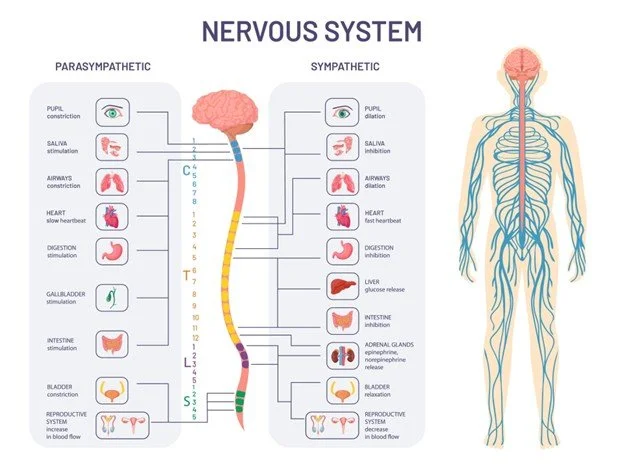
Image from simplypsychology.org
If you're experiencing stress, and all of us are throughout the day, whether acute stressors or micro-stressors, that activates your sympathetic nervous system. Remember from middle school science that the sympathetic nervous system activates the fight, flight, or freeze response in your body. In our busy modern lives, this response is being triggered numerous times throughout the day.
This stress response from your nervous system is a contributing factor to why you feel run-down, unrested, brain-fog, overwhelmed, frazzled, and are experiencing poor sleep, weight dysregulation, moodiness, anxiety, malaise, and like there's something "off" but you can't put your finger on it.
Why is this happening now, when you've led the same fast-paced life for years or decades without issues? Your body has been compensating to fight back against these daily stressors by using its metabolic reserve. Now, in midlife, your reserves are depleted. Your tank is empty.
How to refill your tank and counterbalance the impact of stress.
Implement daily practices, habits, or rituals to refuel. The counterbalance to the sympathetic nervous system is the parasympathetic nervous system. The parasympathetic nervous system, known as the "rest and digest" system, helps your body return to a calm and balanced state. It runs your body's network of nerves when you feel safe and relaxed, and allows for non-critical body functions like digestion, as opposed to indigestion which can be caused by stress. When active, the parasympathetic nervous system triggers your body to focus on restoration.
Ideas for daily rest and repair
Breathing exercises
Yoga
Gentle exercise like walking
Healthy foods and drinks
Meditation or mindfulness
Mini-rest breaks
Stretching
Reducing blue light exposure, especially at night
Sunlight, especially in the early morning
Grounding on the earth, concrete or water
Daydreaming
Writing - whether a journal entry, gratitude or brain dump
Socializing
Petting your pet
Taking a nap
Removing stressors like excessive caffeine, sugar, or alcohol
Finding relief
To begin to find relief, pick 1-3 activities from the list above and do them everyday. Experiment with the type of restorative activities, time of day, and duration, until it becomes a natural part of your routine. Notice what is helping you, do what you enjoy, and tweak it until it's easy. It may take 3-4 weeks of daily practice before you can tell that a practice is making a difference. My personal test to know what is working, is that when I stop doing it, I feel worse - my mood is off, my resilience to adverse situations decreases, and my day is just less satisfactory. If you're going to find relief, you'll want to be proactive, make a plan, be open to making adjustments, and pay attention to how you're feeling. I find that I make faster and more recognizable progress when I write down my intentions and check in with myself daily.
I understand that this might seem too simple to work, but I can tell you from personal experience that my stress levels and daily quality of life improved dramatically when I implemented daily diet and lifestyle self-care practices. I went from literally being "burned out" (aka Hypothalamus-Pituitary-Adrenal Axis Dysfunction) to finding balance, and you can too.
